Buyers and handlers are negotiating new-crop prices against private numbers instead.
The July 2025 Objective Measurement, from the US Department of Agriculture's National Agricultural Statistics Service, put California's crop at 3.0bn lb. The state produced 2.715bn lb and handlers received 2.69bn lb, a miss of about 10 per cent that ended a series the Almond Board had paid for since the 1960s.
Prices fell 50 cents, or 16 per cent, in a single day when that forecast landed — the largest one-day fall Terra Nova Trading said it had recorded — and the Punjabi American Growers Group put the cost to growers at $1.2bn, GV Wire reported in December.
The five forecasts before it had all landed within 5 per cent of the final crop. The board's case was that the report's precision had decayed: the range covered by its 80 per cent confidence interval widened from 300m lb in 2019 to 780m lb in 2025, "calling into question its value for the industry", Natalie Henderson of the Almond Board told FreshFruitPortal in December.
The surviving estimate, the May Subjective Forecast — a survey of about 500 growers — put the 2026 crop at 2.70bn lb, down 1 per cent, with bearing acreage falling for the first time in three decades on Land IQ's estimate for the board.
NASS has also stopped publishing the California report the forecast used to appear in. "NASS made the decision to no longer generate publications tailored specifically to individual states or regions," Bryce Spycher, the Almond Board's senior manager of marketing order services, wrote to industry members on 12 May. The 2026 California forecast now exists as a single table inside the national Crop Production report.
Private estimates have filled the gap, and all sit at or below the official number. Terra Nova Trading's 1 May estimate implies about 2.66bn lb; Blue Diamond Growers cut its own to 2.67bn lb on 10 July; and Sunny Toor, president of Valley Pride Ag, told AgNet West in July that his number was 2.6bn to 2.65bn lb. Terra Nova described a trade that "will no longer enjoy the objective crop estimate in July as a 'backstop'".
Handlers have described the absence as steadying. "With no objective estimate looming ahead, both sides seem more comfortable to continue participating," RPAC, a handler in Los Banos, wrote in its July market update.
Ninety-two per cent of last season's supply had been shipped or committed by 31 July, when the marketing year closed. Crop receipts came in at 2.69bn lb, down 0.7 per cent, and uncommitted inventory at 248m lb, down 17.2 per cent, according to the Almond Board's position report of 11 August.
US shelled almond exports realised $6.55 per kg over the eleven months to June, 46 per cent more than two marketing years earlier, on US Census Bureau trade data accessed via Cropli. Grower field prices for Nonpareil in-shell passed $3 a pound in June for the first time since November 2018, Steve Malanca of West Valley Hulling told AgNet West. "Almond pricing has reached the highest levels seen in about a decade," RPAC said, "but grower costs have risen sharply over that same period."
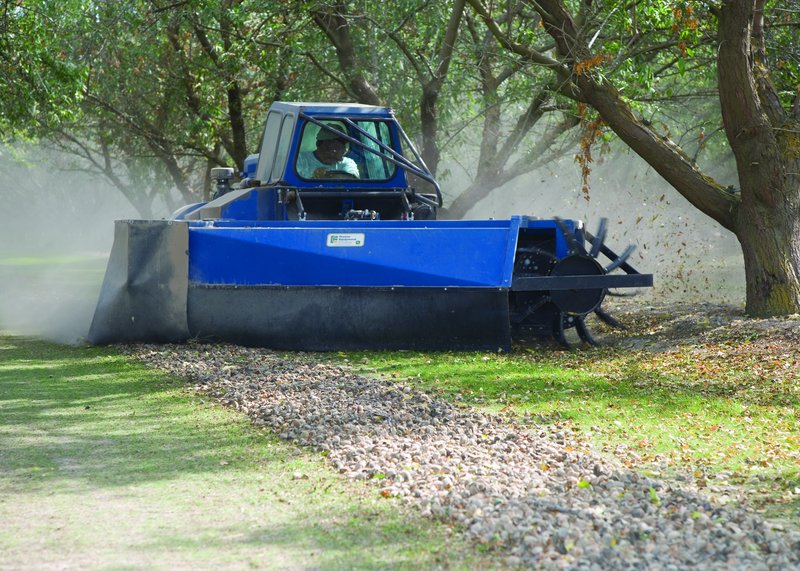
Harvest opened early, with shakers entering the first orchard on 10 July in western Colusa County, Mel Machado, Blue Diamond's chief agricultural officer, wrote in the co-operative's crop progress report of 3 August. Daily maximum temperatures then ran 3.3C to 5.1C above the 1991-2020 normal at all nine of Cropli's monitoring points in the almond belt over the thirteen days to 11 August, peaking on 9 August at 44.6C at Bakersfield.
Handlers attribute the smaller kernels now coming off the trees to warm weather in the weeks after bloom. RPAC reported kernel sizes "considerably smaller than last season" and Select Harvest USA, a Turlock handler, "disappointing kernel size and oversized hulls". The only effect either has put on the August heat is a compressed harvest.
The Almond Board's crop reports page still carries the 2025 Objective Measurement, at 3.0bn lb, among its headline figures.

