Békéscsaba, in south-eastern Hungary, recorded 16.6mm of rain between 1 July and 29 September, according to daily data from HungaroMet, the national weather service, against a previous low of 61.1mm in 2013 in a series that starts in 2002. Szeged took 15.7mm, against a low of 68.9mm set only last year.
ERA5 reanalysis data accessed via Cropli, a reconstruction of past weather back to 1940, showed the three months were the driest on record at Debrecen, by 0.2mm, and second only to 1946 at Békéscsaba, Szolnok, Szentes and Hódmezővásárhely, and at Arad across the Romanian border.
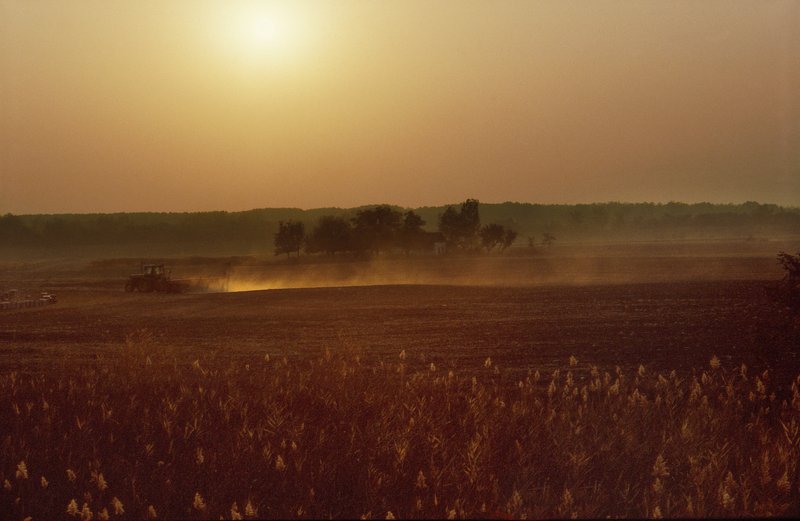
"We can't start sowing, because rapeseed can't be sown without a minimum of rain. The forecasts don't show any in the coming days, and the deadlines are slipping away," Dragan Glamočić, Serbia's caretaker agriculture minister, told reporters on 2 October, according to UNA.rs.
Crops north of the Sava and Danube rivers, "especially in Banat", had suffered, while conditions south of them were excellent, he said.
Rapeseed, a winter oilseed, is sown only a few centimetres deep in the layer of soil that dries out fastest, and has to emerge and build a leafy rosette before the cold arrives.
Hungary's topsoil is moist enough for rapeseed and for preparing land for winter cereals "only in parts of Transdanubia and the north-east; elsewhere the soil is extremely dry", HungaroMet said on 1 October. The 90-day rainfall deficit on the Great Plain runs at 130mm to 170mm, it said.
Transdanubia, west of the Danube, took 15mm to 30mm around 11 September, and rapeseed there got the rain it needed to emerge, HungaroMet said on 24 September.
SOWING INTO DUST
Growers in the dry belt have been weighing sowing into dust against not sowing at all.
Farmers in Olt county, in southern Romania's Oltenia region, have put about 16,000 of a planned 20,000 hectares of rapeseed into dry ground "in case the rain comes", Ion Drăgoi, director of the county agriculture directorate, told the state news agency AGERPRES on 2 October.
A shower of only 2mm to 4mm would do more harm than none, he said, because the seed "comes up, and if it doesn't rain again, it has to be resown, because the rapeseed dies". About 15mm to 20mm is needed. Craiova, the region's main city, took 2.5mm of rain in the first 29 days of September, 5 per cent of the 1991–2020 normal, on the ERA5 data.
In Timiș county, in western Romania, rapeseed sown about three weeks earlier had barely emerged, except on about 800 hectares belonging to one farmer with irrigation, Radio România Timișoara reported on 30 September.
Further north, in Bihor county, Antoniu Avrămuț, who farms about 650 hectares at Tulca, said cracks in his fields ran more than 60 to 70 centimetres deep. "We can't sow rapeseed. Unfortunately, if the rains don't come, we won't be able to sow rapeseed; we can't prepare the land," he told the farm magazine Revista Ferma on 18 September.
In Serbia, Nedeljko Savić, president of the Stig farmers' association, has abandoned the crop because the ground is too dry for it to come up, the Beta news agency reported.
With enough rain, rapeseed could still be sown safely right up to 5–10 October, Tamás Petőházi, president of Hungary's grain growers' federation GOSZ, told Agrárszektor in mid-September. That deadline has now arrived.
Many farms had given up on the crop by mid-September, Tibor Cseh, secretary-general of the farmers' association MAGOSZ, told Agrárágazat, adding that he expects the area left fallow to rise significantly. Hungary's harvested rapeseed area had already fallen every year from 310,000 hectares in 2020 to 172,000 in 2024, according to FAO data accessed via Cropli.
Hungary's agriculture ministry declared a general drought force-majeure exemption on 29 September, so that growers who cannot meet the conditions of area and livestock payments because of the drought, such as keeping soil covered, will not lose them.
Vojvodina, Serbia's northern grain province, is less extreme. Its July-to-September ranked fifth driest since 1940 at Novi Sad and 10th at Zrenjanin on the ERA5 data.
LITTLE RAIN IN FORECAST
The 51-member ensemble from ECMWF, the European weather forecasting centre, gives Békéscsaba an 82 per cent chance of less than 25mm of rain between 5 and 19 October, with a median of 12mm.
The middle of October is normally a dry stretch: 60 per cent of years between 1991 and 2020 also brought less than 25mm over the same dates. Even a normal fortnight cannot make up a three-month deficit. HungaroMet sees a chance of change in the second half of this week.
Wheat is not yet late. Serbia's optimal sowing window runs from 5 to 25 October, UNA.rs reported, and growers are deliberately delaying into the second half of the month, Vladimir Aćin of the Institute of Field and Vegetable Crops in Novi Sad told the Belgrade daily Politika, as reported by UNA.rs. In Olt, wheat and barley sowing has not started.
Hungarian farmers intend to sow about 1.02mn hectares of winter wheat, some 30,000 more than last season, according to sowing intentions published by MAGOSZ, Agrárágazat reported on 29 September. Much of that wheat will follow a near-record 807,700 hectares of sunflower, a deep-rooted crop that drew down the subsoil water the wheat now needs, Agrárágazat said.
Hungary, Romania, Bulgaria and Croatia grew 18.9 per cent of the EU's wheat in 2024, FAO figures show. The EU imported 610,000 tonnes of wheat and 138,000 tonnes of rapeseed from Serbia in the year to June, according to Eurostat data accessed via Cropli.
Romania's export belt lies outside the drought. Fetești, in the Bărăgan plain behind the Black Sea port of Constanța, took 87 per cent of its normal September rain and more than normal over the summer. Romania's share of the EU's wheat exports outside the bloc rose to 26.6 per cent by tonnage in the year to June, from 15.7 per cent three years earlier, Eurostat data show.
A dry seedbed is not new to the region. Bulgarian rapeseed faced "dry soils" that "persisted until late September" last year, with "some farmers reportedly reseeding", the US Department of Agriculture's office in Sofia reported in December.
More than 150mm of rain then fell in a few days at the start of October 2025, turning the soil from very dry to waterlogged.

