Those weeks are the run-up to the Clemenules, the mid-season clementine that anchors production in the province of Castellón, and the point of the season the Spanish trade regards as decisive for the campaign as a whole.
South Africa is choosing to concentrate exports of its late varieties into those weeks, coinciding with the start of the northern hemisphere harvest and the launch of the first Spanish mandarins, Castellón Plaza reported on 3 August, citing the Spanish agriculture ministry’s reinforced-monitoring report on EU citrus imports. Valencian growers and exporters say the European market stayed heavily supplied with South African fruit through October last season, and that they no longer regard that as exceptional.
South Africa’s September–October shipments to the EU rose to 110,721 tonnes last year from 32,818 tonnes in 2020 — almost all of the five-year increase — according to Eurostat figures accessed via Cropli. Peru, the next-largest counter-season supplier, has held broadly flat since 2021 at about 13,000 tonnes. The figures cover the three customs lines that together make up small citrus – mandarins and satsumas, clementines, and hybrids – with intra-EU trade excluded.
The ministry’s report put extra-EU small citrus imports at a record 589,181 tonnes between September 2025 and June 2026, up 33.6 per cent on the previous campaign and 52.8 per cent on the five-campaign average. Cropli’s own extra-EU series, which runs only to May, shows the same pace.
South Africa led the season on the ministry’s figures with 149,828 tonnes, a quarter of the total, and Turkey almost doubled its shipments to take second. Morocco, which had led the September-to-June window for most of the past decade, fell to third.
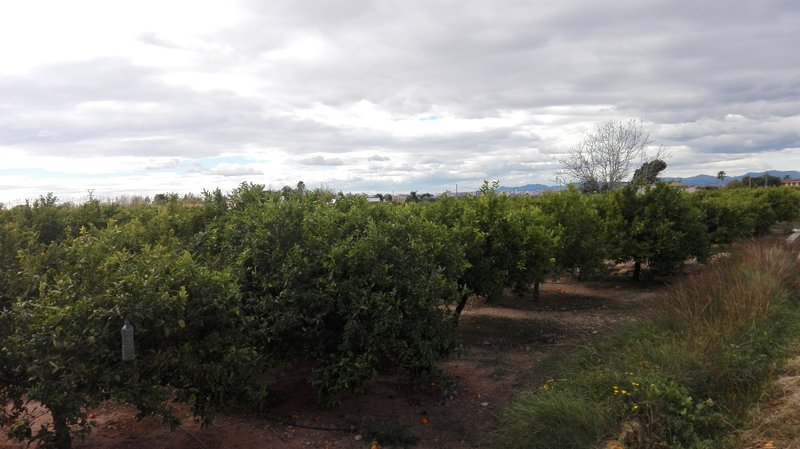
Spain’s citrus season “has begun slowly, primarily due to delayed fruit ripening and increased competition from Southern Hemisphere mandarins, which now arrive over a longer period”, the US Department of Agriculture’s Foreign Agricultural Service in Madrid wrote in its annual EU citrus report on 7 January.
The southern fruit is arriving against a Valencian crop forecast close to a two-decade low. La Unió de Llauradors i Ramaders, the Valencian growers’ association, put the region’s 2026/27 citrus harvest at just under 2.6mn tonnes in a technical forecast published on 6 August, the second-smallest in twenty years, though 3.4 per cent above last season’s minimum. It forecast small citrus at 1,067,000 tonnes, up 2 per cent, the growth coming mainly from hybrid varieties.
Castellón accounts for 553,524 tonnes of that total, including 250,000 tonnes of Clemenules, on the association’s provincial breakdown reported by Castellón Plaza.
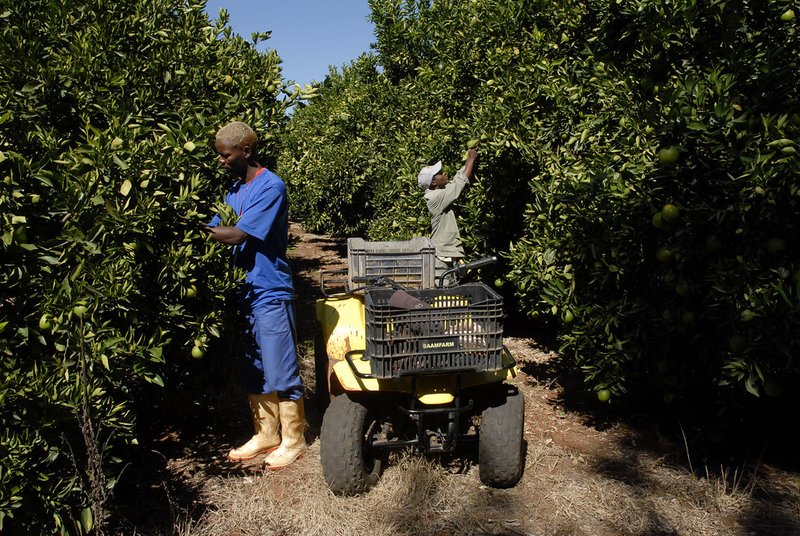
Spain’s orange production fell about 6 per cent in 2025/26 to a 16-year low on the agriculture ministry’s estimates, FAS Madrid said in the same report — yet Spanish Navelina at Rungis, the Paris wholesale market, averaged €1.11 per kg over November to February, down 17 per cent on €1.33 a season earlier, on Rungis quotations accessed via Cropli.
The crop now coming to market has grown through the hottest summer in the Valencian record. June and July were the warmest of the past 86 years at all six of Cropli’s Valencian citrus monitoring points, beating 2025, which had held the record at every one. Castellón de la Plana ran 3.19C above the 1991-2020 normal, at a mean of 26.69C. AEMET, the Spanish meteorological agency, has said the June–July bimester was the warmest in its national record.
Water is not the constraint this season. Reservoirs in the Júcar basin stood at 64.2 per cent of capacity in the first week of August, with the Spanish national reserve at 69.6 per cent. Rainfall over the past 180 days has run above normal at Castellón de la Plana and Nules on Cropli’s monitoring points; only Valencia City, at 71 per cent, is genuinely dry.
La Unió attributed its low forecast to ageing orchards, weather that hampered fruit set, pest and disease pressure, rising costs and the continued abandonment of plots – 2,762 hectares lost in 2025, with citrus area down roughly 15 per cent over the decade.
La Unió’s figure is a technical estimate rather than a field-measured aforo. The agriculture ministry and the Lonja de Cítricos de Valencia publish the official campaign forecast in September. The Clemenules reaches the market in early November.

