Mean temperatures for the two months ranked first of 87 years at all four monitoring points in Murcia ran 2.79°C to 3.12°C above the 1991–2020 normal, according to ERA5 reanalysis and Open-Meteo observations accessed via Cropli. Each beats the previous record, set at all four points in 2025.
The Spanish industry has already blamed last year's heatwave for the crop it has just finished harvesting. AILIMPO, the Spanish lemon and grapefruit interprofessional association, attributed its 18 per cent downgrade for the 2025/26 season to “the effects of climate change, which has caused adverse conditions during the flowering and setting phases, with a significant increase in rainfall in spring and higher than usual temperatures in June”.
AILIMPO forecast a 2025/26 crop of 1,027,000 tonnes against 1,254,330 tonnes the season before, with planted area “virtually unchanged” at around 50,000 hectares. The shortfall was one of yield, not area. The season closed at roughly 1,050,000 tonnes, so within a 2.5% margin.
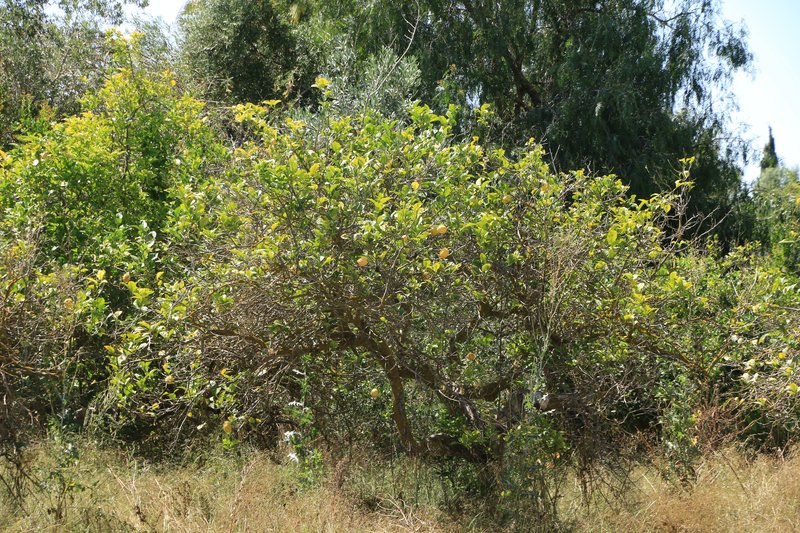
The same heat-led disruption holds across the bloc. USDA's Foreign Agricultural Service in Madrid put EU lemon and lime production at 1,342,000 tonnes for 2025/26, down for a second year from 1,727,000 tonnes in 2023/24. Spain accounts for close to 65 per cent of EU lemon output and Italy 30 per cent.
Buyers have paid for the shortfall in European harvests. Spanish Fino category I fruit at the Rungis wholesale market outside Paris carried a year-on-year premium in every month of the season, from 6 per cent in April to 22 per cent in November, according to market quotations accessed via Cropli. Spanish consumers paid 29.7 per cent more for lemons in June than a year earlier, according to the campaign group FACUA-Consumers in Action.
The market has turned to non-European sources of supply. “The European lemon season ended relatively early this year, so the first Eureka lemons from the Southern Hemisphere hit the market as early as April,” said Henry Lührs, citrus product manager at the Hamburg importer COBANA. “The harvest estimate in South Africa has also already been revised upward, so we're facing unusually high supply pressure this year.” Prices have come down repeatedly since the end of June, he said.
Cropli's own price series corroborates the early close. Rungis quotations for Spanish Fino stop in April 2026, a month earlier than the previous season. EU imports from South Africa under HS 080550, the customs line that combines lemons and limes, rose 55 per cent to €302mn in 2025, Eurostat data accessed via Cropli show — the fastest growth of any supplier outside the bloc.
A third short crop is not guaranteed. June and July 2024 ranked between ninth and thirteenth warmest of 86 years at the four Murcia points, warm but nothing like a record, and the 2024/25 crop still came in 21 per cent below the 1,595,181 tonnes harvested in 2023/24. Spring rainfall, pest pressure and the alternate-bearing habit of lemon trees all feed into the number AILIMPO publishes.
Nor is drought the anomaly this year. A rainless Murcian summer is the base case: at three of the four points, June and July have passed with no measured rain in at least eight separate years since 1940, and last year's pair was wetter than the median at all four. ECMWF's SEAS5 seasonal model keeps the region 0.8°C to 1.8°C warmer than its own climatology every month through January, with no marked rainfall deficit over the harvest.
AILIMPO released its 2025/26 estimate on 12 September last year, and it landed close to the mark. The association is not forecasting a permanent shortage.
“Over the past two years, the weather conditions have prevented production from reaching its full potential, unlike in the 2023/2024 season, when oversupply was recorded across markets,” said José Antonio García, director of AILIMPO. “We know that, in the right conditions, we could see a repeat of that scenario.”

