Afrucat and the Departament d'Agricultura put Catalonia's 2026 pear harvest at 101,500 tonnes on 25 July, 5 per cent below 2025, blaming high temperatures during the fruit's development. Conference was the one variety they had rising, against falls of 13 per cent and 8 per cent for Limonera and Blanquilla, respectively.
The World Apple and Pear Association reached the same conclusion across the bloc, putting the EU Conference crop at 905,693 tonnes, up 2.1 per cent, at Prognosfruit in Constance on 6 August, four days before the Lleida harvest opened. The association flagged the number as provisional the day it published: "As Prognosfruit is taking place, several production areas are still impacted by adverse temperature and drought conditions."
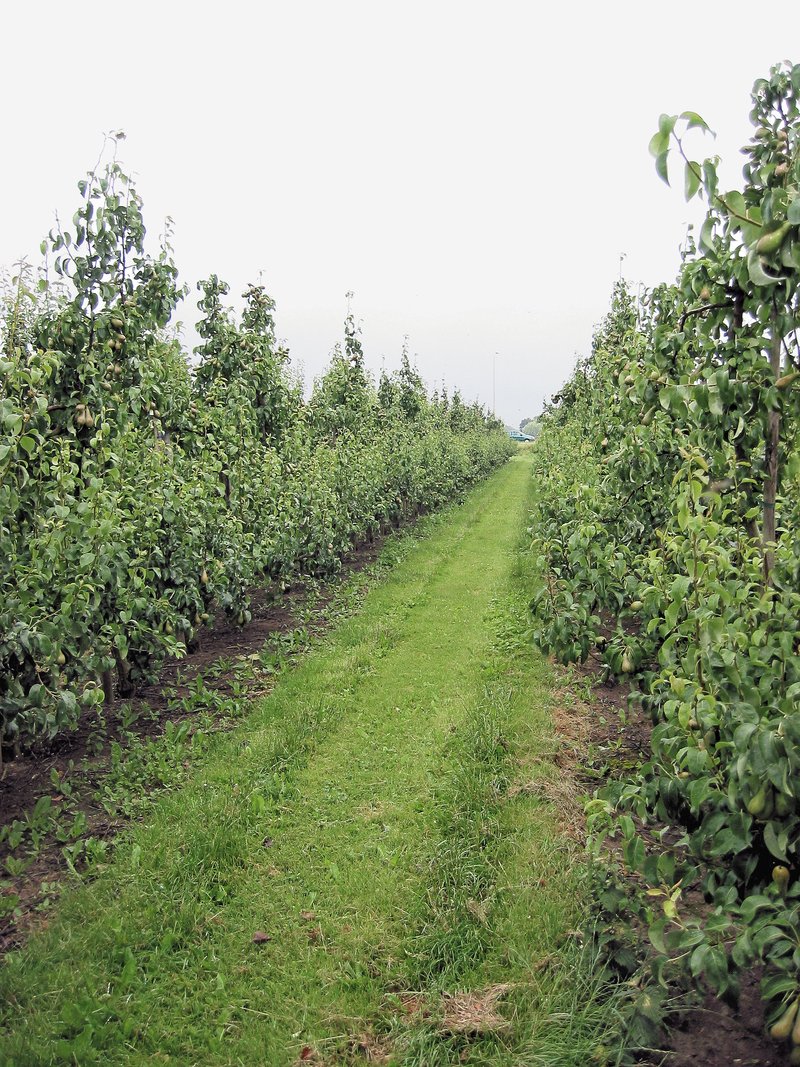
Both forecasts were built from fruit counted at the end of June, before the heat that followed cut its size — a loss that registers only at the weighbridge. Pears are coming off the tree 5 to 8 millimetres smaller than in other years, Jaume Gardeñes, head of the vegetable sector at Unió de Pagesos, told the Catalan news agency ACN on the opening day. Many farms will finish "well below" 8,000 kilograms a hectare, he said.
The drop comes off the hottest July in 87 years of record at Aitona, in the Baix Segre stretch of the pear belt, according to ERA5 reanalysis accessed via Cropli. Its mean daily maximum of 38.0°C ran 4.8°C above the 1991-2020 normal, past the 36.2°C of 1941. The peak was 42.6°C on 7 July. Meteocat, Catalonia's meteorological service, has confirmed July as the warmest month in its own record.
Above 36°C the tree stops working, Gardeñes told ACN in July: the leaves dry out and the fruit stops growing. "It is not an irrigation problem," he said. Conference is not native to the region, he added; it comes from the cooler, wetter countries of northern Europe.
Heat is not the only account of the season. Narcís Poch, the union's national head of stone fruit, blamed a humid spring of constant rain for a serious fruit-set deficit on most farms on 15 July. The same spring had helped spread fire blight into holdings where the disease had never been detected, he said.
Five days before Conference opened, the Blanquilla harvest began in the same districts with fruit of larger calibre. Joan Blanch, working a hectare at Grenyana in the Horta de Lleida, told ACN he expected about 25,000 kilograms, "very similar" to last year, with fewer pears on the tree but bigger ones. Blanquilla, he said, stands the heat better than Conference.
A short crop in Lleida is landing in a long European market, in the weeks that carry the export year. Spain ships 61 per cent of its pear exports between August and December; none of that trade will appear in customs data before the autumn releases. Dutch Conference at the Rungis wholesale market outside Paris averaged €1.63 a kilo over the first twelve days of August, against €2.50 in the same days of 2025, on market quotations accessed via Cropli. Gardeñes expects Lleida growers to be paid €1.00 to €1.20 a kilo, and says anything below that will not cover production costs.
The variety is failing inside a sector that was already shrinking. Spain produced 222,020 tonnes of pears in 2024, its smallest crop since 1967, according to FAO figures accessed via Cropli, with harvested area down from 27,333 hectares in 2010 to 18,090. Apples on the same ground have held: Spanish apple output fell 8 per cent between 2015 and 2024, against 37 per cent for pears. Lleida's pear area has fallen 42 per cent in a little over twenty years, to 8,919 hectares in the summer of 2024, on Catalan agriculture ministry figures reported by Segre.
Some growers ran their anti-frost sprinklers through the worst of the heat to bring the temperature down and raise humidity, though only about 8 per cent of farms have them. Unió de Pagesos has held several meetings with the Department of Agriculture to ask for a varietal conversion plan.

